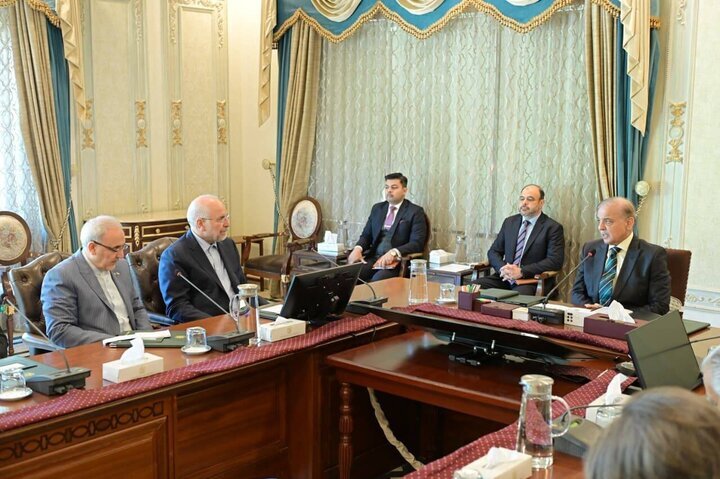
Iranian Parliament Speaker Mohammad Bagher Ghalibaf has called for fundamental reforms in the banking and trade mechanisms between Iran and Pakistan to achieve the targeted $10 billion annual trade volume between the two countries. Speaking at a meeting with Pakistani Prime Minister Shehbaz Sharif in Islamabad on Friday, Ghalibaf emphasized the need for “drastic steps” in banking, bartering, and free trade cooperation. Heading a high-ranking parliamentary delegation, the speaker noted that economic, political, and security collaboration between Tehran and Islamabad must deepen further, particularly in following up on agreements made during Iranian President Masoud Pezeshkian’s recent visit to Pakistan.
Ghalibaf thanked Pakistan for its support during the 12-day Israeli-imposed war against Iran, commending the solidarity shown by Islamabad during that period. He also discussed recent developments surrounding Iran’s nuclear negotiations, revealing that indirect talks with the United States in Oman were disrupted by Israel’s attack on Iran—a move later acknowledged by Washington. Ghalibaf added that although Iran reached an understanding with the International Atomic Energy Agency (IAEA) in Cairo regarding the snapback mechanism, European parties failed to uphold their commitments in subsequent discussions in New York.
Condemning what he described as U.S. opposition to the progress of Islamic nations, Ghalibaf stressed that unity and cooperation among Muslim countries could counter such pressure. He further expressed Iran’s readiness to help mediate differences between Pakistan and Afghanistan. Prime Minister Shehbaz Sharif, in response, reaffirmed the strong and enduring friendship between the two nations, highlighting mutual support during recent crises. Sharif also reiterated Pakistan’s backing of Iran’s right to peaceful nuclear energy and uranium enrichment, underlining the importance of continued partnership and regional solidarity.